Event Alarm
Sync App
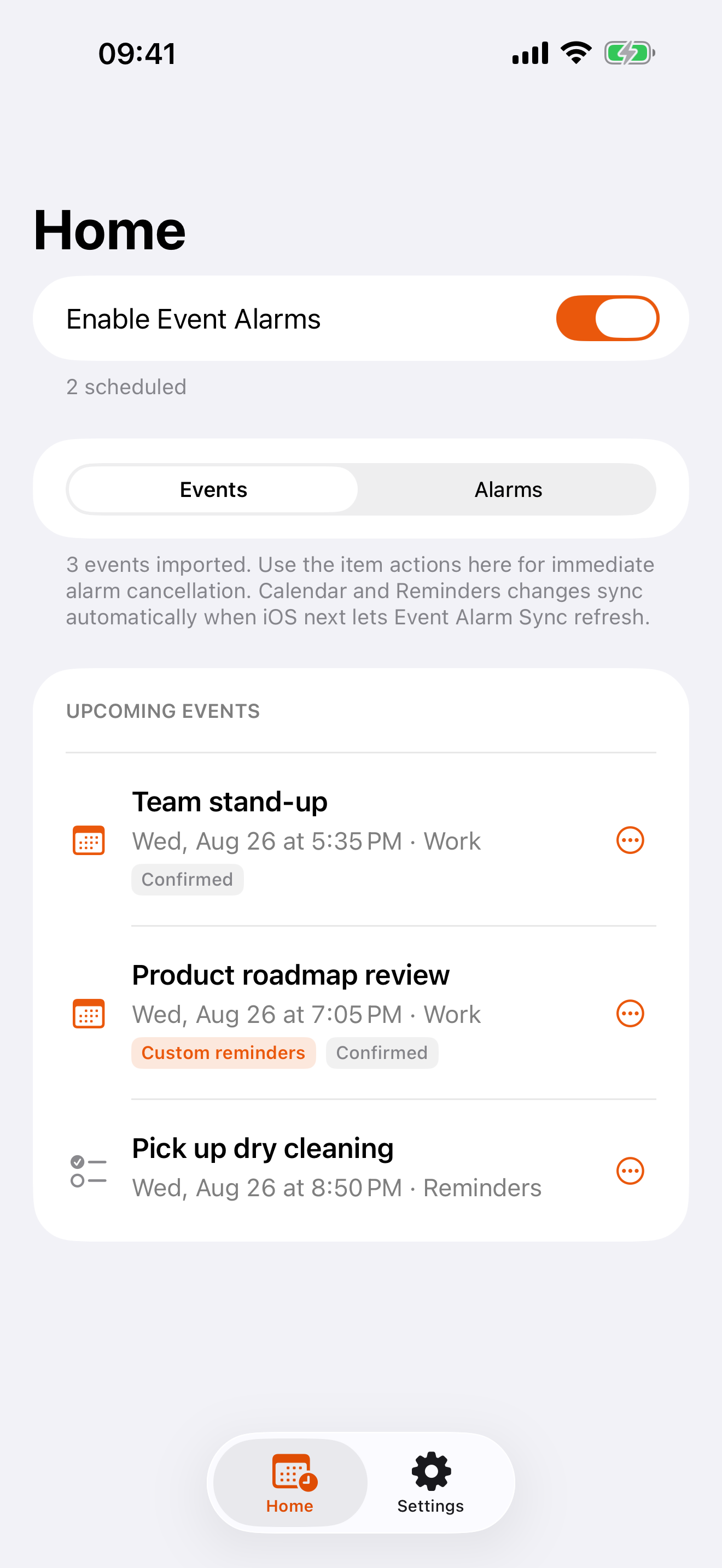
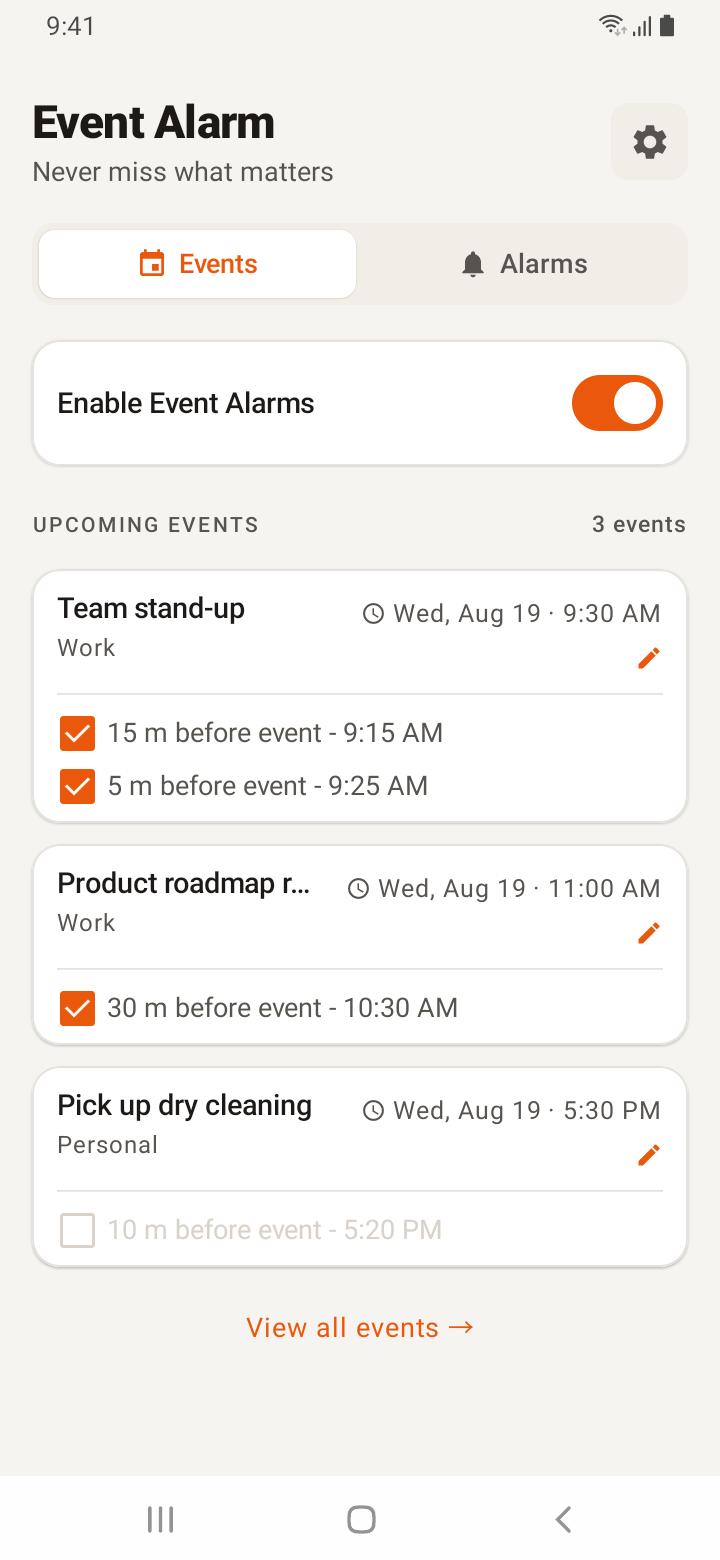
Turns upcoming calendar events — plus dated Reminders on iPhone — into prominent alarms, so you stay on top of what matters. Two native apps, one for each platform, each using the alarm capabilities its own system provides.
Free, no account required. Available now on the App Store and Google Play.
Get it for your phone
Each version is built natively for its platform — Swift and SwiftUI on iPhone, Kotlin and Jetpack Compose on Android. Both let you pick which calendars participate, adjust reminder timing, and silence individual alarms. The alarm itself uses what each platform provides, so the two differ where the operating systems do.
iPhone
- ✓ Built in Swift 6 and SwiftUI on EventKit, AlarmKit, and WidgetKit
- ✓ Alarms delivered through Apple’s AlarmKit, with System Default plus five bundled sounds
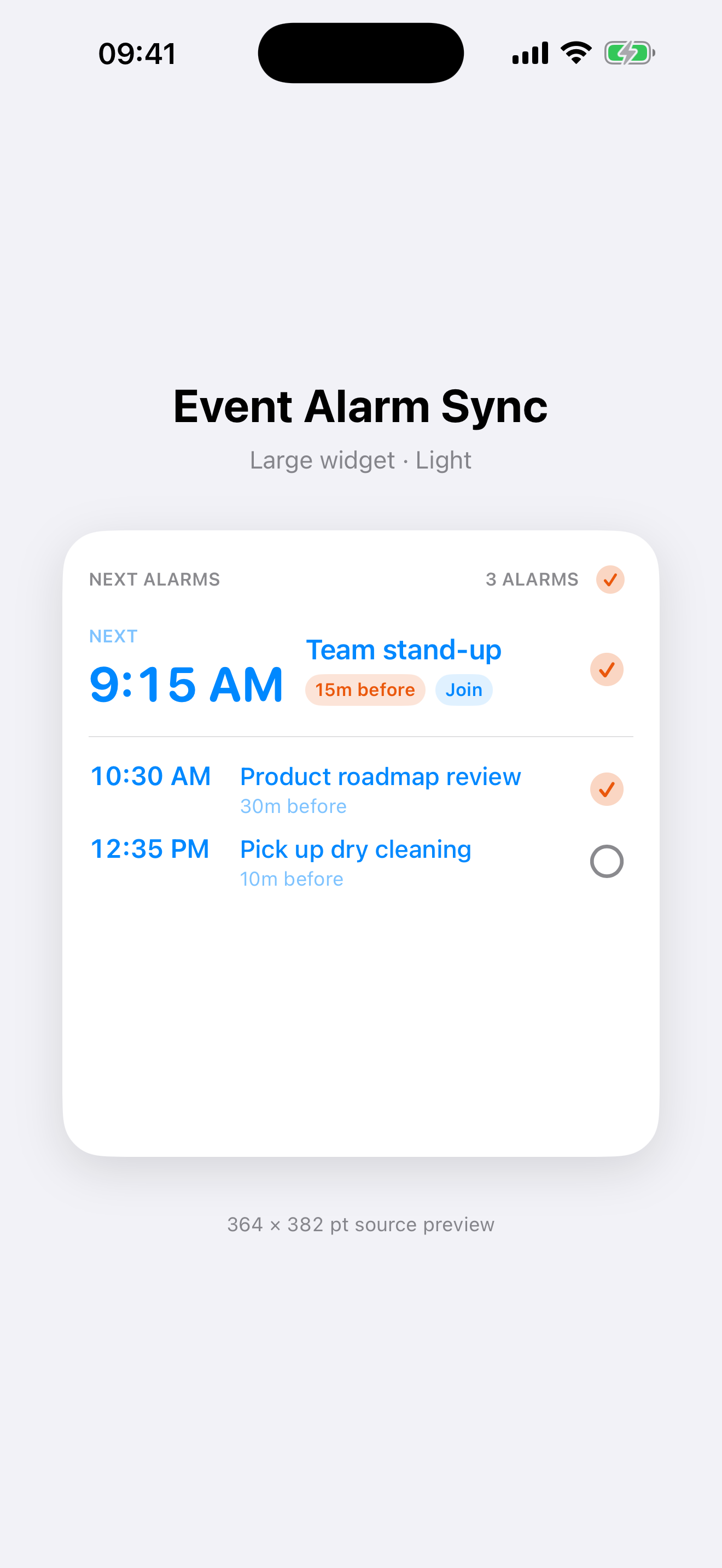
- ✓ Interactive small, medium, and large Home Screen widgets, plus a Lock Screen widget
Android
- ✓ Full-screen alarm UI with sound, vibration, and snooze controls
- ✓ Exact alarm scheduling with
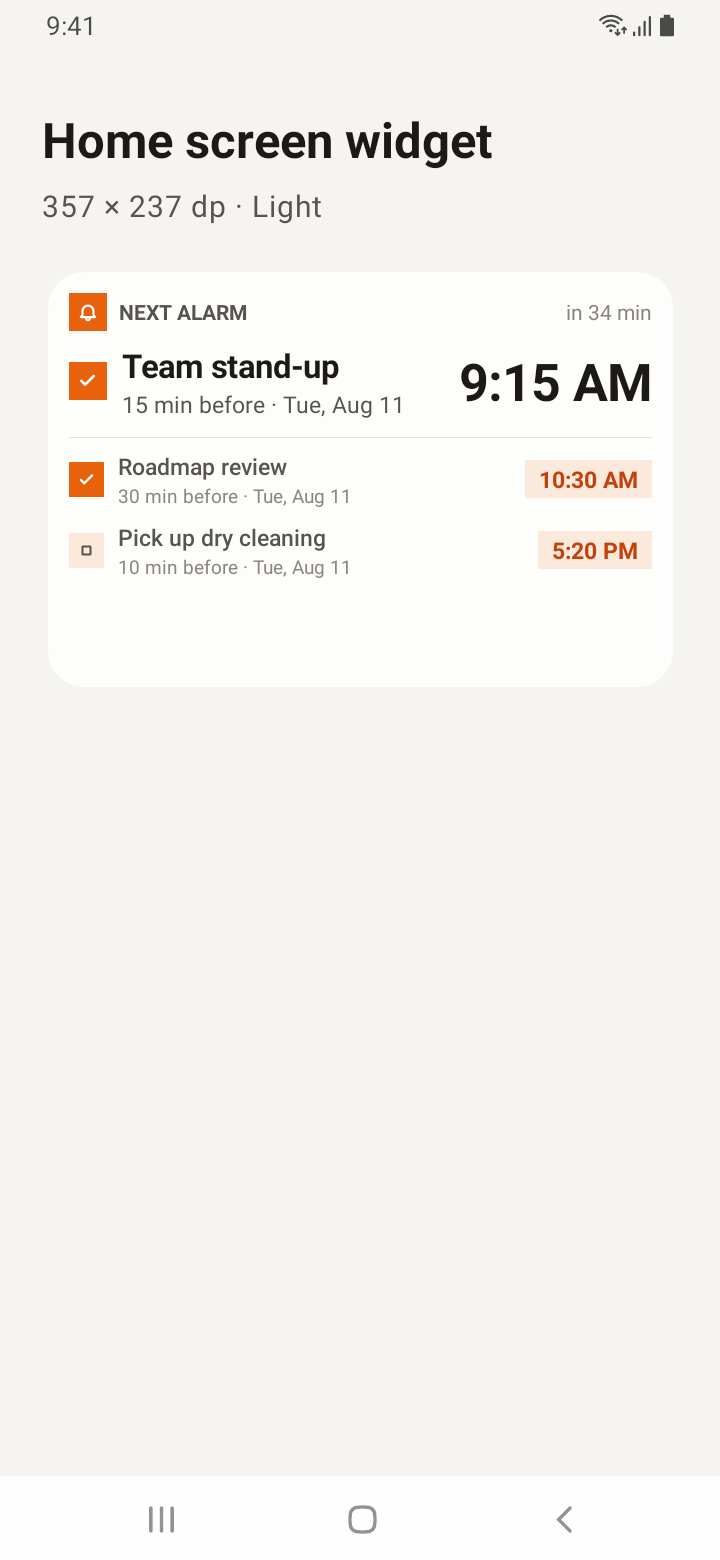
setAlarmClock(), subject to system settings - ✓ Responsive Home Screen widget with interactive alarm toggles
Built for reminders you can’t afford to miss
Reliable event alerts
Converts upcoming schedule items into prominent alarms using each platform’s own alarm system.
Busy schedules
Work meetings, time-sensitive appointments, personal commitments, and recurring events that need strong alert behavior.
Practical control
Snooze, reminder tuning, calendar filtering, per-event alarm behavior, and silencing or restoring individual alarms.
At-a-glance widgets
Shows what is coming up in interactive Home Screen widgets on either phone, without opening the app.
Everything you need to stay on time
Where the two platforms differ, the difference is called out.
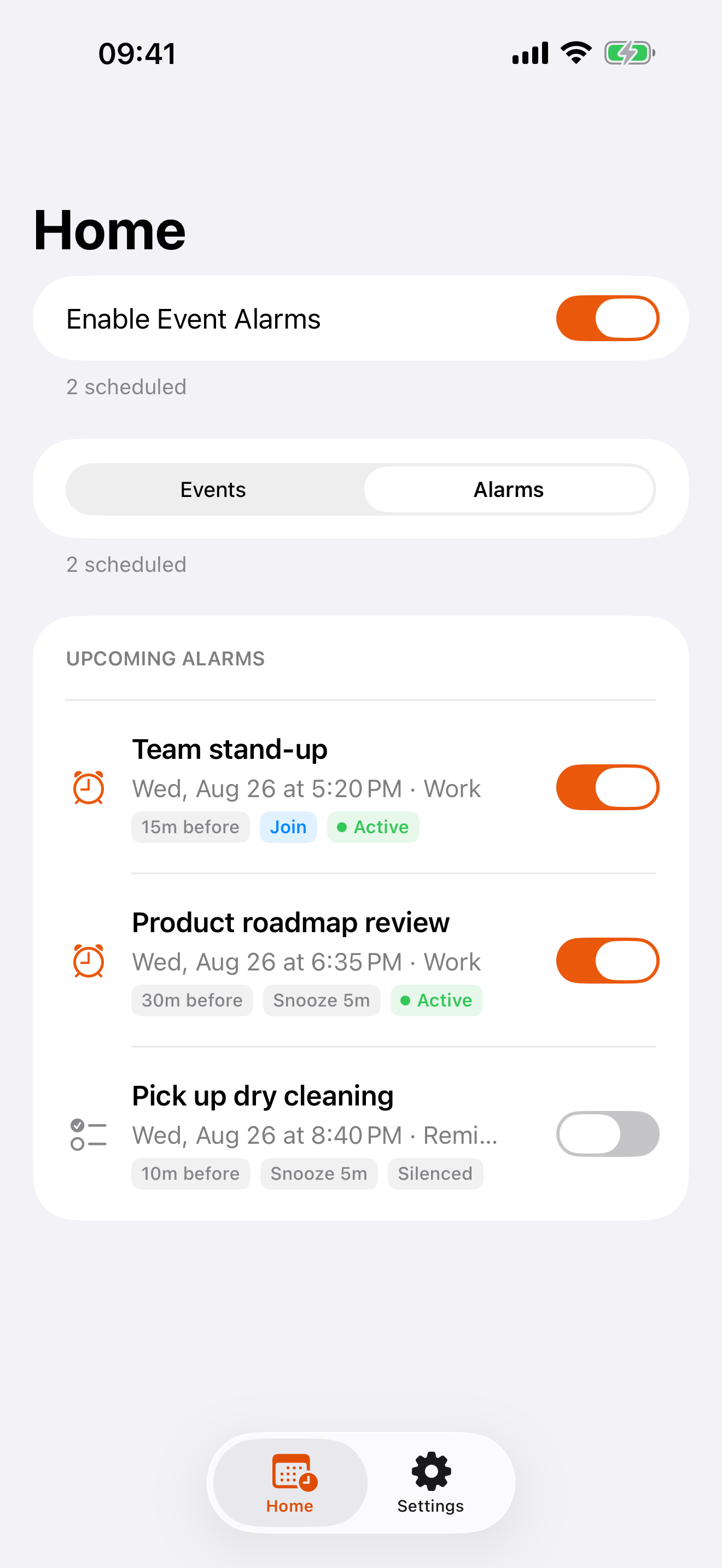
Calendar reminders become real alarms
Every reminder time is scheduled as an alarm with timing-aware handling. See your next alarms in a clean timeline, edit timing in a tap, and let the app update automatically as source data changes.
- ✓ Apple’s AlarmKit alarm surface on iPhone; a custom full-screen alarm on Android
- ✓ Scheduling through AlarmKit on iPhone and exact alarms on Android
- ✓ On Android, alarms and widgets are restored after reboot and rechecked in the background
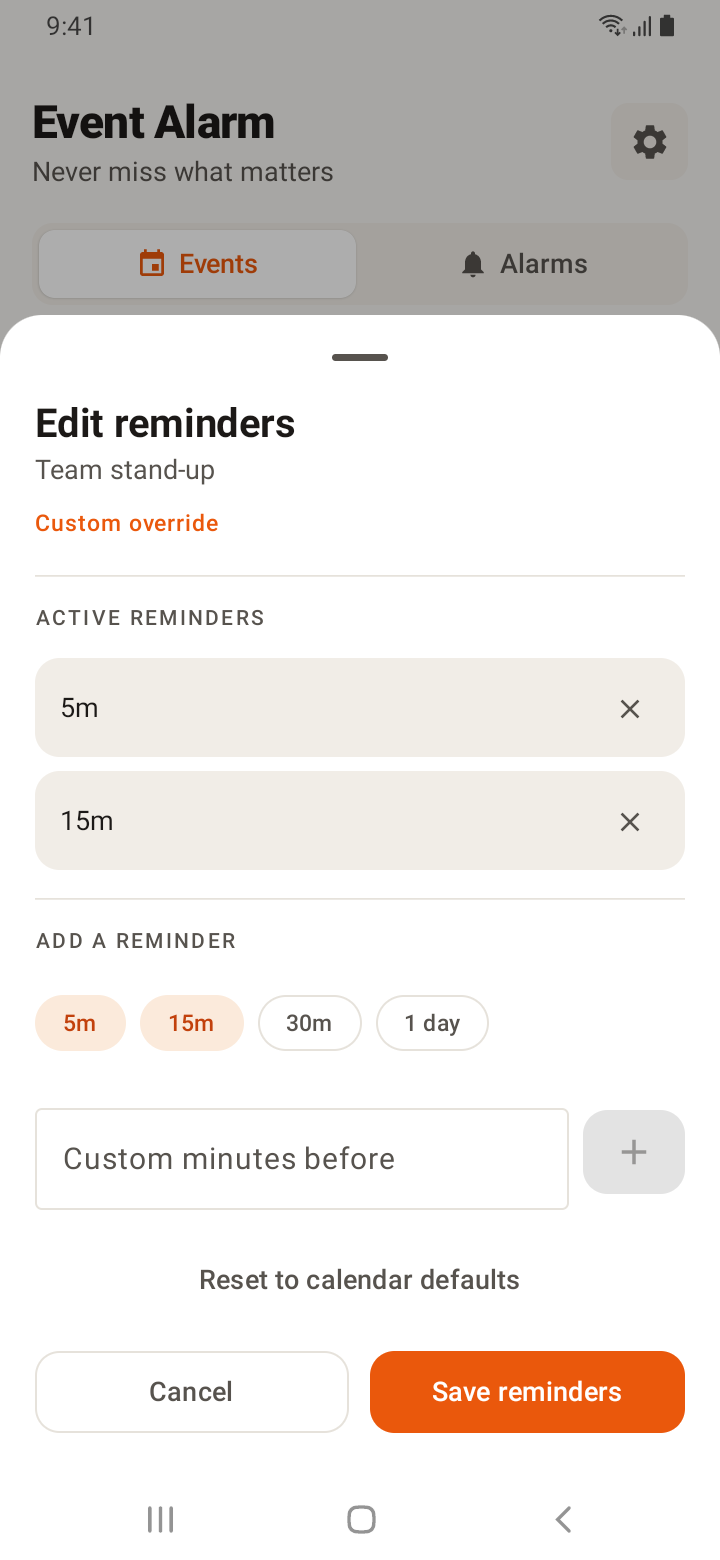
Tune reminders exactly how you want
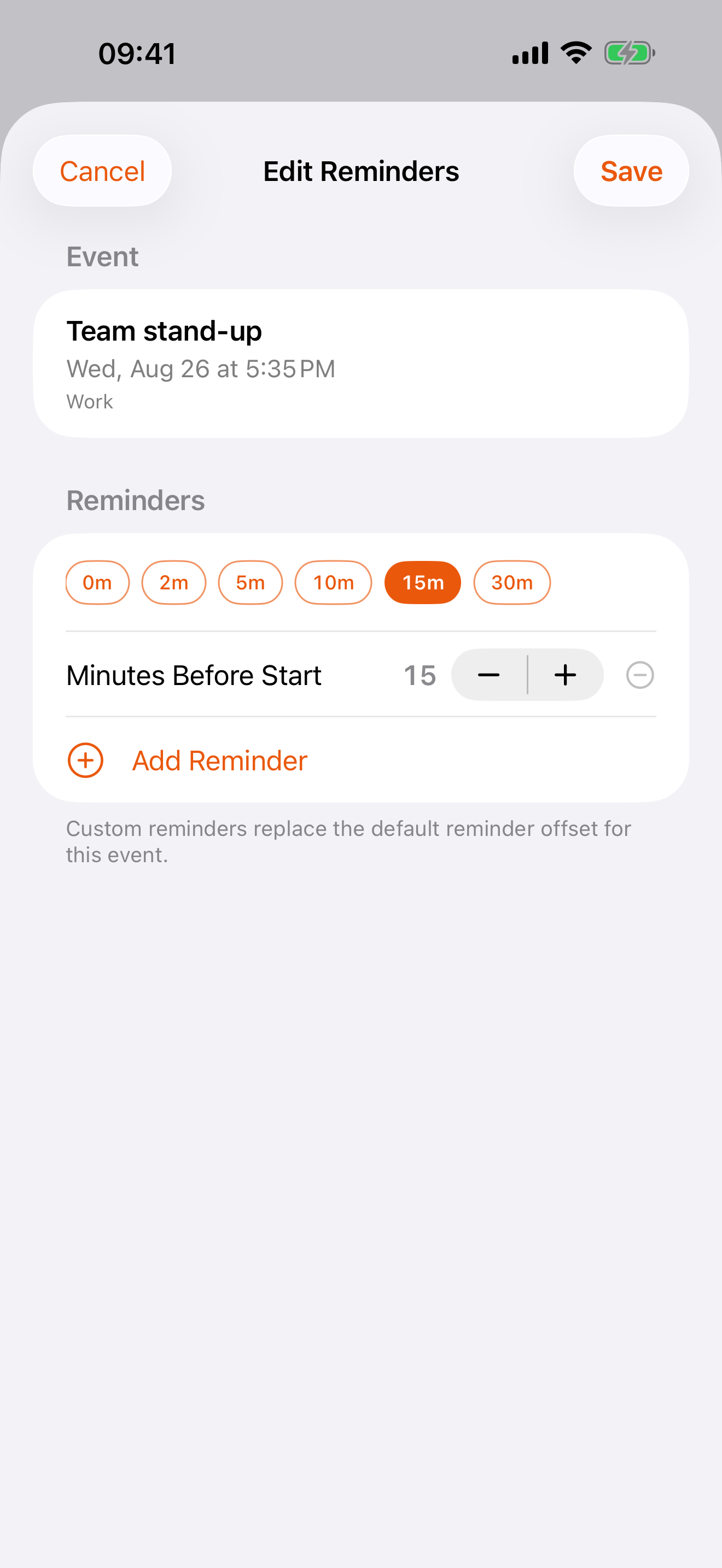
Add or remove reminder offsets per event, set a custom minutes-before value, or apply global defaults. Choose which calendars can trigger alarms and filter out the noise.
- ✓ Per-event reminder overrides and global reminder offset controls
- ✓ Calendar selection — pick which calendars can trigger alarms
- ✓ Optional filtering to ignore all-day or unconfirmed events
Alarm behavior on your terms
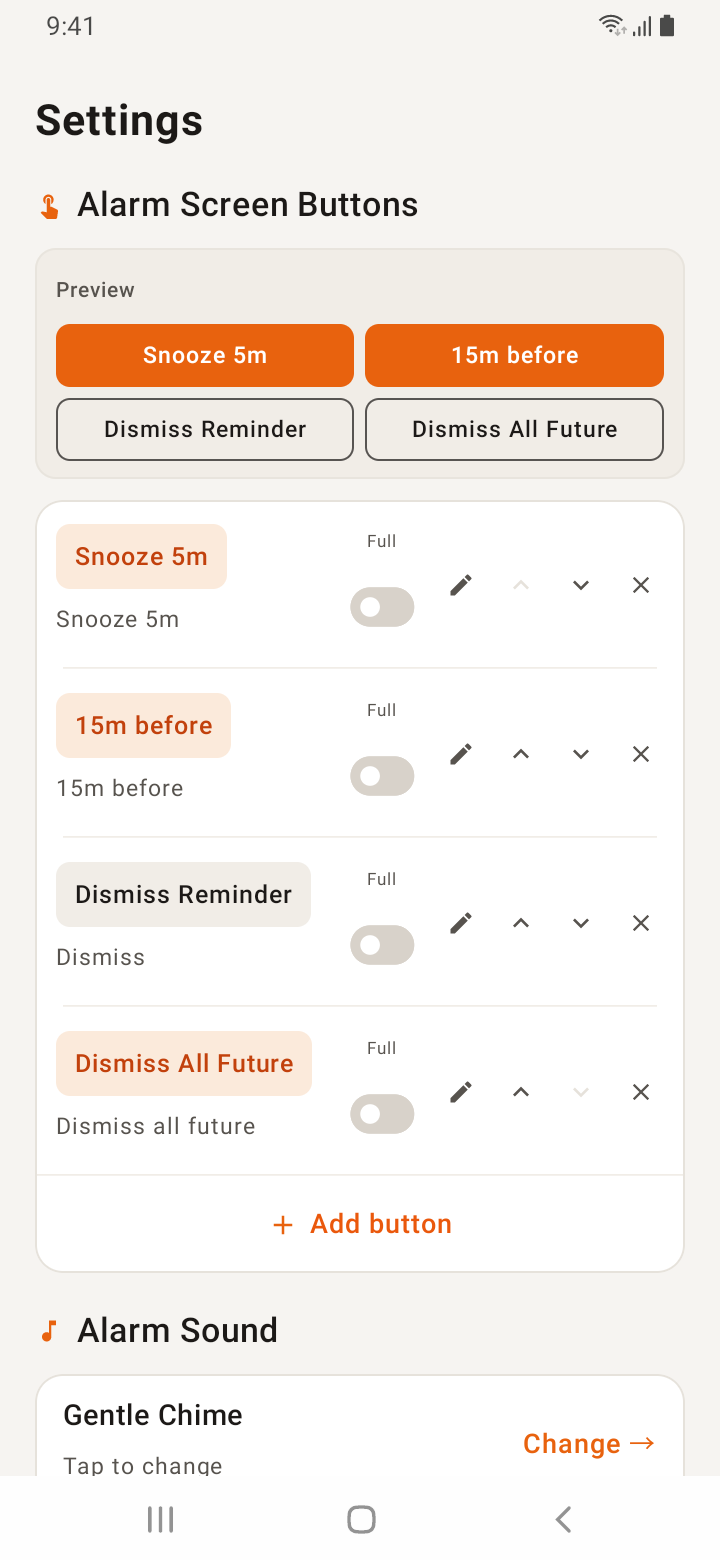
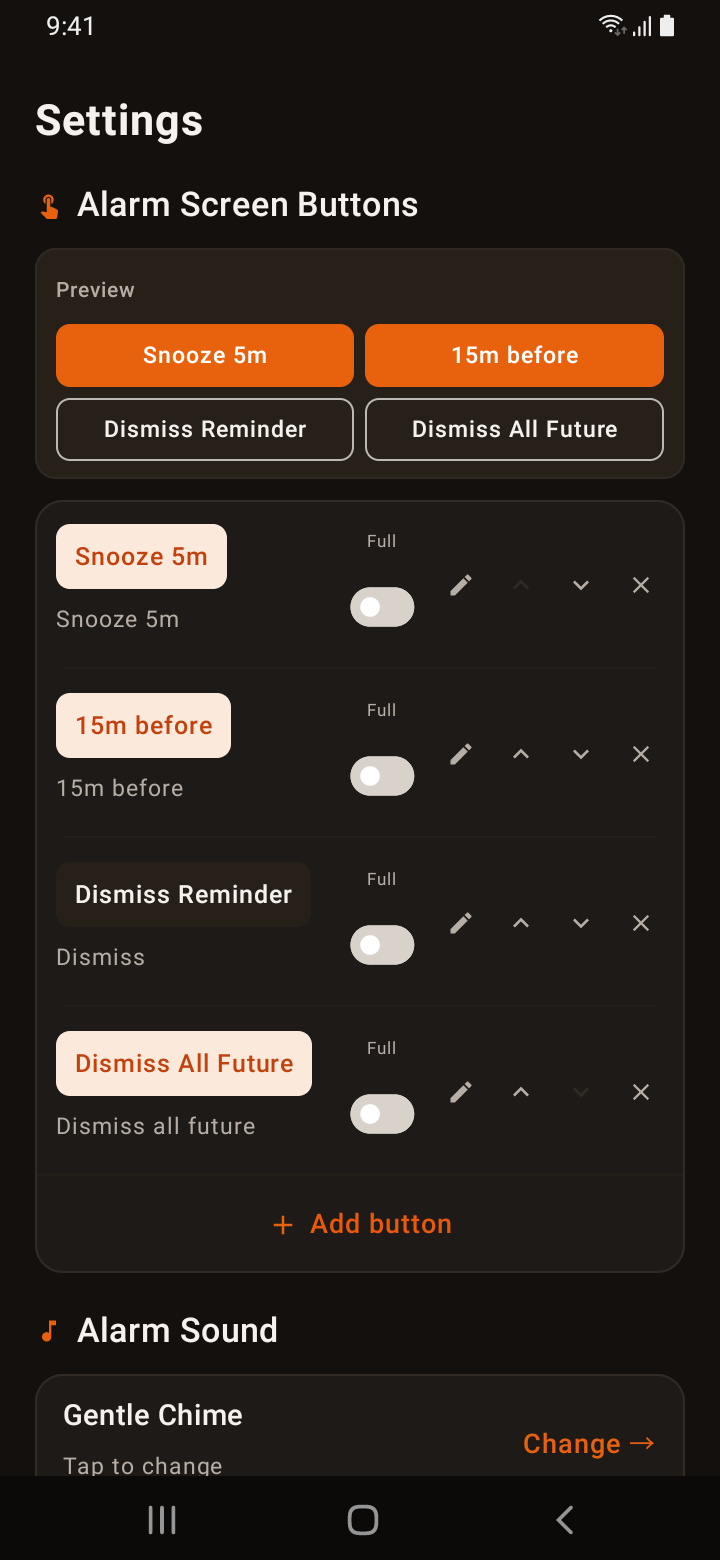
Custom alarm sound, vibration, voice announcements, and configurable snooze. Design the alarm screen with your own buttons — snooze durations, dismiss, and dismiss-all-future.
- ✓ Device alarm sound, repeat-until-dismissed, vibration, and spoken announcements
- ✓ Configurable, reorderable alarm-screen buttons
- ✓ Snooze, snooze-before-event, dismiss, and dismiss-all-future actions
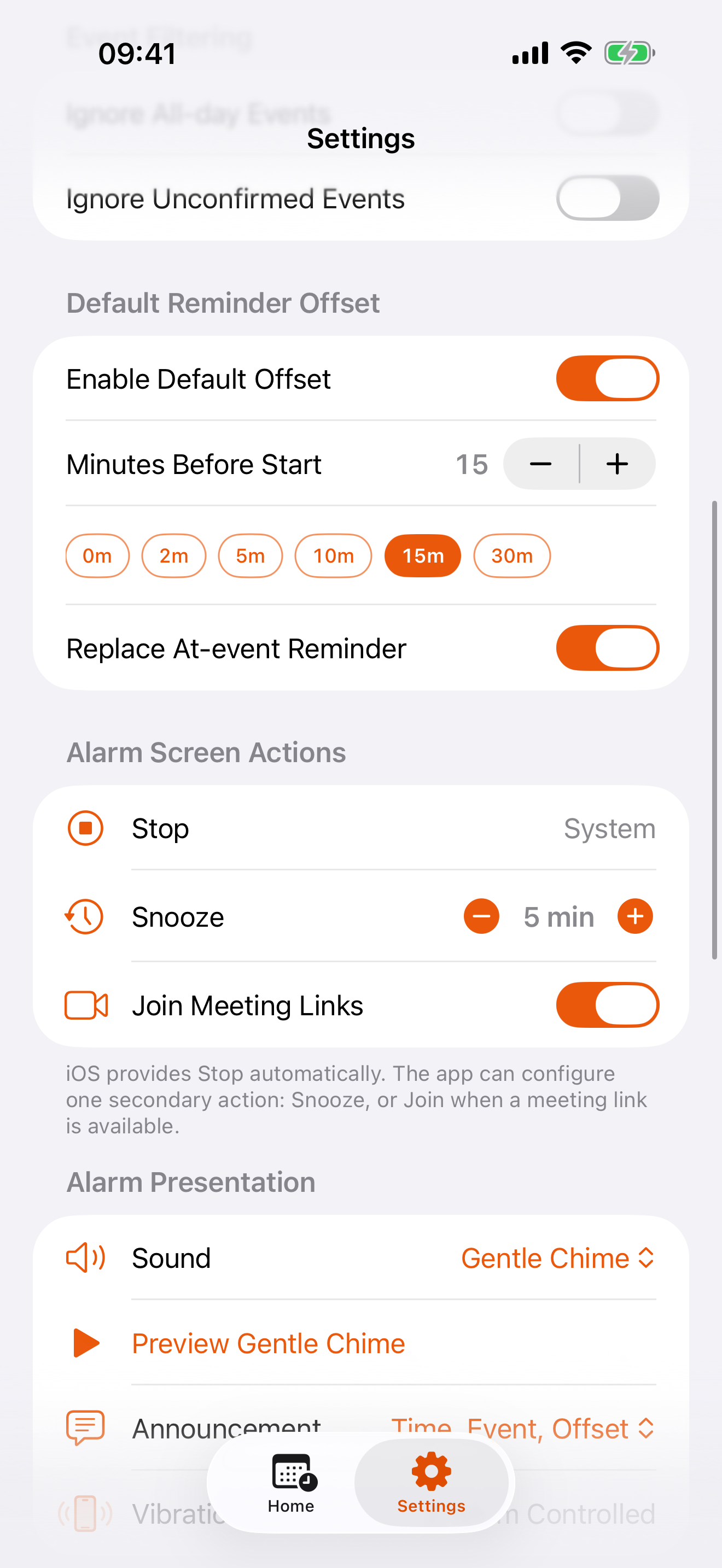
On iPhone, AlarmKit owns the alarm screen: a system Stop button plus one configurable secondary action — Snooze, or Join when the event carries a meeting link.
See what you control before it rings
Review current iPhone timing and AlarmKit settings alongside Android’s configurable alarm controls.
From calendar to alarm, automatically
The same shape on both platforms, using each one’s alarm system.
Reads your calendar events — plus incomplete Reminders with due dates on iPhone.
Finds upcoming reminder times and schedules an alarm for each one.
Fires the alarm at the scheduled time: AlarmKit on iPhone, a full-screen alarm on Android.
Lets you snooze, dismiss, or silence reminders — preferences stored locally.
Shows what is next in interactive Home Screen widgets.
Keeps alarms current: reboot recovery and repeated verification on Android, best-effort background audits on iPhone.
What each permission is for
Every permission maps directly to alarm reliability. Nothing here powers advertising or tracking. The two platforms ask for different things.
Note: on Android, alarm reliability can vary by device vendor settings — excluding the app from battery optimization can improve consistency. On iPhone, AlarmKit handles delivery, and background refresh is best effort: iOS decides whether and when it runs.
Local-first by design
- ✓ Calendar, alarm, settings, widget, and diagnostic data are processed on the device.
- ✓ No user account, and no developer-operated backend.
- ✓ On iPhone 1.0.2 and Android 2.0.11 or later, anonymous product and reliability analytics can be turned off at any time in Settings.
- ✓ No advertising or cross-app tracking; calendar and reminder content and local diagnostic logs are never sent to analytics.
Good to know
- ! iPhone requires iOS 26 or later and is not available for iPad. Android requires 11 (API 30) or later.
- ! Reminders may be delayed if external calendar sync is delayed on the device.
- ! Alarm behavior differs by platform: Android shows a custom full-screen alarm, while iPhone uses Apple’s AlarmKit surface with a single configurable secondary action.
- ! Timing depends on the operating system: Android exact alarms are affected by permissions and manufacturer settings, and iOS background refresh is best effort.
Download it, or ask us anything
Available now on the App Store and Google Play. For questions, bugs, or business inquiries, reach out any time — we read every message and respond directly.